"We cannot solve our problems with the same thinking we used when we created them."

Albert Einstein

April 28, 2013

Misc

(No comments)

This week, I officially completed a graduate level course on geography and social theory. Having absolutely no background in geography or sociology, it was an interesting experience. What drew me to this module was that it combined spatial thinking with social thinking. With the disease research I’m hoping to do for my PhD, space is going to be a part of it through spatial analyses. As for the social theory part, I’m going to be focusing on diseases that also affect humans so it would be interesting to think about it in terms of both space and the social.

Sometimes I wonder if I am more suited to the social sciences, but then I remember that I cannot understand their dense writing for the life of me. I’m interested in learning about concepts and theories, but I can’t digest writing that is convoluted, especially the ones that even those who are part of that field have a hard time deciphering.

The readings for this course have really challenged me and made me stretch my thinking power. We covered topics and dense writing that I had never been exposed to before or knew existed. The major themes that we covered were space and place, agency and structure, theories of difference, theorizing the city, governmentality and biopower, and performativity and subjectivity.

These are some of the well known authors that we read:
Doreen Massey
David Harvey
Michel Foucault
Judith Butler

I handed in my research paper for this class a few days ago, and I’m feeling glad that I took the plunge to take a course that was so far out of my normal range. I’m not sure how much will stay with me as I go back to ecology and biology, but I think it was an interesting exercise in exploring other disciplines. In the past, I’ve taken courses like philosophy of science, urban anthropology, and philosophy and film. Sometimes it takes something so different to bring in new perspective. What I chose to write about was actor-network theory and virtual space (in the form of the Internet to be specific) and the role of ideas in those spaces and contexts. Maybe I’ll post some snippets of it here!

One of the topics that I wrote about for a reaction paper was academic dependency. I think this is a very interesting phenomenon, especially now that I’m interacting more with the academic realm. The last section on performativity and subjectivity made me really think about myself and my identity. You could certainly say that as a scientist, you are expected to “perform” your role as an expert. Performance not in the evaluative sense like what grades you get or where you publish, but performance as in you are the performer and you are performing for an audience. From the perspective of performativity, this would mean performance is what makes you you. This is not saying that everyone is fake. Not at all, your performance of yourself is what makes you real.

How does this apply to science?

I think to really think about this in terms of science, we have to consider who scientists are performing for. At risk of oversimplifying, they are performing for the granting agencies, the academic journals, the department committees, least of all the general public. We may say that we are doing it for the common good, but at the end of the day the common good isn’t what brings in the funding. The pressure to perform to expectations has put so much pressure on researchers, that some have resorted to faking data and misrepresenting results in publications. It is regrettable, but it happens.

I think this largely occurs because they have lost sight of who/what should be the goal audience for their work, the common good. If you are not framing your research in terms of how it can improve current knowledge or improve how things are in the status quo, then what is the point? Not just framing your research, but the greater good should be the driving force for why the research should and is being done. Lying about results does good for no one.

What do you think? Is this social theory a bit too distant conceptually to be applicable to science?

One of the authors that I wrote about before, Nicky Gregson, is now working on science in practice. Though she doesn’t go into much detail about this project, she conducted an ethnography of a university science lab. It will be interesting to see what comes out of it!

April 25, 2013

Misc

2 comments

When I was applying for this program, I wondered how different it would be to start in the middle of the academic school year. I wasn’t sure if it would have been strange or leave me at a disadvantage. Mostly it has felt the same, although in some cases you feel like you missed half of the party.

  • You are less likely to fade into the crowd because the number of people starting at the same time as you will be much smaller. This might also mean that administrative staff will be less stretched thin than for the first semester of the academic year, but that might not be true.
  • If you have a lot of coursework and/or teaching duties but have summers off in between semesters, starting during the second semester means that you have a bigger summer break in between your first 2 semesters to work on other important things like getting your preliminary research going and preparing for your qualifying examination. This could be a MAJOR advantage to consider since you would get this long break in the middle of your first year, as opposed to towards the end of it!
  • Housing could go either way. There might be fewer options for on-campus housing but if you are looking for off-campus housing there might be less competition. This will greatly depend on where you are of course.

There are some disadvantages though, like having to keep telling people that you only just started if they assume that you have been around for a semester already. Another disadvantage might be that you don’t have as strong a bond with your cohort or as big a cohort that you start with and go through your program with, but assuming you have some social ability, I think you could overcome that within a few weeks of being in your lab group.

May 31, 2012

Misc, Science

(No comments)

We keep hearing more and more cases where ‘bad science’ gets uncovered. Here is a really cool infographic by the folks at Clinical Psychology.

It goes along with some things I mentioned in a post about the role of ignorance in science. All of the incentives seem to be setting the system up for biased work, and the pressure to produce papers endlessly isn’t helping.

Bad Science

Stuart Firestein was the guest speaker at this month’s Secret Science Club. His area of research is neuroscience and the olfactory system, but at this talk he discussed his ideas on ignorance and how it is important for driving scientific research.

Ignorance, according to Firestein, is what drives science because discoveries do not happen as a result of sequential studies and reasoning. It is more like searching in a dark room for a black cat (his example), although sometimes there won’t be a black cat at all. It may be difficult for career scientists to admit that they don’t have a clear idea of what they are doing or looking for, but asking those questions to get at what we don’t know and how to get there is what is important to the process.

I put ignorance in quotes because it does have a lot of negative connotations, like Firestein admits, but I think those negative connotations are sometimes too dominant to justify using the word plainly. I think there should be a better word for it, but don’t have something in mind at the moment, so the quotation marks.

Make Your Own Path

Another issue he talks about is the vastness of knowledge. How can we possibly keep up with all of the knowledge found and advances in science? I cannot keep up with ecology journal articles, much less the weekly issues of Nature and Science (which are the gold standard in academic publishing). With the increasing pace of publishing academic articles, there is also an increase in field-specific jargon. The bar to enter a field and be an expert gets set higher and higher each year, and to know one’s field becomes a really tough prerequisite to being a respected researcher (and to getting tenure for those who really care about that).

Dr. Firestein teaches an interesting seminar course at Columbia University, where prominent researchers come in and discuss what they don’t know and what they want to know in their field. It is this type of discussion that brings the research to a more universally understandable level, because the jargon doesn’t exist yet for things we don’t know about. I really like this point because I agree that it is so hard to even read a single academic article in a field that I am not active in, but I can relate to discussion in terms of the unknowns.

Firestein also said some interesting things about hypotheses (and the scientific method). He doesn’t like them, and I agree. He argues that hypotheses open up research to biases (or, more boldly put, pigeonhole research into biases and expectations), whereas more curiosity-driven open-ended questioning avoids bias in some ways. But the way to get funding for your research is to describe and structure your studies in a hypothesis-driven way. Basically, the scientific method is bogus!

If I was able to ask Dr. Firestein a question, I would ask him how he feels about the lack of interest in publishing negative results. Meaning, studies that come up short of significant results, but still might have some interesting intellectual value by informing people about what didn’t happen. I can imagine a new academic journal going by the title of “Ignorance,” but that might not give much confidence to researchers who are looking to publish. (Update on May 29, 2012: Here is a post about this very topic talked about in Nature!)

This talk couldn’t have come at a better time as I’m getting closer to doing my own research projects (I’ll post more on this later). I don’t have any hypotheses, although I have some questions, some thoughts and a short plan. But, I think it’s ok not to have set plan. Most of the time.

Today is the second day of the meeting of the Convention on Biological Diversity (CBD)’s advisory body, the Subsidiary Body on Scientific, Technical and Technological Advice (SBSTTA), in its 16th meeting (SBSTTA 16). This body makes recommendations for implementation of the Convention.

There is an estimated 600 people here, with delegates and parties representing around 150 – 190 countries, and also attendees representing international organizations like FAO, UNEP, UNDP, DIVERSITAS, and nonprofit organizations in science and technology. It’s a super diplomatic event!

This is the first event I’ve been to where more languages other than English is spoken, and interpreted, for attendees to communicate, make statements and come to decisions. Yes, they have those things you put on your ear to hear the interpretation in real time!

We are here because we have a side event tonight after the working group sessions. The topic is biodiversity and health, with an emphasis on the ecosystem or ecohealth approach to research, policy, and collaboration. We are putting on this side event with DIVERSITAS and the CBD.

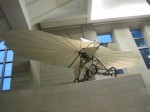
The conference is being held at the International Civil Aviation Organization (ICAO) in Montreal, QC, Canada. The building has many interesting art pieces and historical artifacts. Here is one photo of a cool aviation related thing in the building:

March 11, 2012

Misc

2 comments

You have 3 weeks to submit your artwork for this contest! Details below:

The academic journal EcoHealth proudly announces our 2nd Biennial International Art Competition. We would like to extend an open invitation to students, graphic artists, and any other interested individuals to participate. Artwork should exemplify the IAEH mission: To strive for sustainable health of people, wildlife, and ecosystems by promoting discovery, understanding, and transdisciplinarity.

The top nominees will be displayed during the biennial EcoHealth 2012 conference in Kunming, China from October 15-18, 2012. The winning artwork will be decided during this event, which will include $1,000 for first prize, $500 and $250 for 2nd and 3rd, and one-year subscriptions to the print-version of the journal EcoHealth. Artwork will be judged upon its relevance to the mission of our organization and winners will have a chance to be featured on the cover of an upcoming issue of EcoHealth.

For full details go to this webpage, and this page to see past winners (first prize was on the cover of Volume 7 Issue 3!