"We cannot solve our problems with the same thinking we used when we created them."

Albert Einstein

In a recent paper published in Conservation Biology, Blickley et al. analyzed 60 job advertisements and interviewed 14 people from organizations working in conservation from the nonprofit, government, and private sectors.

In reading the article and this blog post, I was thinking, might there be a discrepancy between what survey respondents say they are looking for in candidates and what they actually choose when filling a position? After all, when it comes down to it the job advertisement is just a hook to try to get the right audience to sit up, pay attention, and get their CVs into the HR inbox in a timely manner. It is in the employer’s best interest to make it sound exciting to the right type of people, and certain keywords will incite interest in different kinds of people.

Interviewers may say they are looking for a number of skills from the top of the list, but nothing can replace a general feeling that you get from a person when meeting them and talking to them for the first time. How much is that feeling worth? Is it going to get you the job, or at least tip the scale in your favor? This is so intangible that we may never get a real sense for how it factors into the job seeking of hopeful graduates, but it is interesting to consider alongside the qualitative data that has been collected.

I think graduate students who are reading that paper and are thinking about their prospects for getting a job should be concerned with acquiring the skills that are highly valued for whichever sector they are aiming to get into. These skills include things like project management, IT, interpersonal, networking, written communication, etc. Some suggested ways to acquire these skills such as managing volunteers, or organizing an event or project. While I agree that these types of skills are important to develop, I also think that graduate students shouldn’t do this blindly. So what if you helped organize a graduate student congress, if you are just going to be blithe about it during an interview, it does not show much for your character or skills set. No one wants to hire someone who just does things to add them to their CV. People are naturally drawn to people who are passionate about what they have done or are doing!

Having just left the nonprofit sector to join PhD program, I can say that the things that nonprofit organizations value are accurately described by Blickley et al. (i.e. project management, program leadership, communication skills, and financial skills). This is in addition to research skills that you may have if you are recruited for a research position. Something that I did not realize before working there was that nonprofit researchers often have to manage their own grants, including filling out paperwork and taking care of budgets. This takes a chunk of time out of your day which may end up spilling over into non-working hours. Some people may end up working all the time to be able to take care of the more administrative side as well as being up on their research. Being able to juggle both aspects of the job can be crucial to surviving in the nonprofit sector.

In addition, I think what they really mean by communication skills, written communication, and interpersonal skills is having tact (besides having the basic skills of writing and speaking). It is important not to step on people’s toes, especially outside collaborators. It could really cost you your job if you say the wrong thing or piss off important contacts. It sucks to think that you have to be political when doing research or good works, but it is the truth and you have to acknowledge it!

I think another interesting thing that the authors note in the discussion is that most of the job advertisements that they analyzed were from the USA. There may be important cultural differences that would make this type of study give very different results. Having had just a little bit of time in Asia and having done just a little bit of reading (including the book titled “Quiet” by Susan Cain (book review to come soon!) and some social theory in a geographical context), I cannot say very much in the way of this, but my intuition is that interpersonal skills do not hold the same level of importance in “Eastern” cultures than in “Western” ones.

What are your thoughts? Do you think graduate students should pay attention to these or other tips?

February 23, 2012

Musings

6 comments

I wrote several months ago about not going down the traditional PhD route. I still feel the same way, but now I have a few new insights to add to that. Some of which may involve exciting world travels.

I’m not closed off to the possibility of going back to graduate school, and if I do I’d probably do another masters with the same reasoning as before for avoiding PhD programs. I am, however, feeling much less positively towards universities in the United States of America. For masters programs, tuition fees are high, and stipends and scholarships are hard to come by. This is even if you are able to get into the school of your choice. And with the economy the way that it is, the competition is the stiffest it has ever been with people applying for graduate school who would normally be pursuing other opportunities.

I have been doing some research on graduate programs abroad. There are some good opportunities for scholarships, and some schools waive tuition fees completely. Even if that were not the case, many of the programs I’ve looked at have much lower tuition fees than in the US.

This article in the Economist details the rankings, costs and figures of business schools internationally. The interesting part is comparing the costs of tuition and length of program, and the increase in earning power after completing the program. Some of the less expensive programs ($33K per year vs. >$60K) still produce good results, with earning power increasing by 64 to 100+ percent (although this may not be a perfect metric).

But that isn’t what I’m mostly concerned about. Sure, I would like my earning potential to increase. But mostly, I want to add to my skill set so that I can do more interesting things. It’s why I’m taking part in online courses and learning coding. The arguable leader in this area is MIT, with their OpenCourseWare. Online learning resources are so hot right now, that it would be a shame not to take advantage. This Stanford professor left academia after teaching an online course, so that he could create an online education startup.

For now, to me it is much less about getting the credentials, and more about transfer of knowledge and development of skills. At least, this seems to be the bandwagon that I have found myself on.

August 13, 2010

Musings, Science

6 comments

I was lucky enough to catch The xx at Summerstage in Central Park last Sunday after being away for a tournament. And by “catch,” I mean I sat/stood outside of the gates in a clearing in the trees and barely was able to see a sliver of stage.

There is something about being outside in semi-nature, enjoying live music, that makes me very very happy. Maybe it is the combination of being in a green, grassy park with the sun shining and breeze blowing, and good aural stimulation that just relaxes the mind and body. It could also be that outdoor concerts are associated with summer, which is a generally happy time of the year. Yay for Vitamin D!

This reminds me of a few things I’ve read in the past few months. First, there were some studies that looked at how consumers spent their money. They split this into 2 categories: material purchases and “experiential” purchases. The researchers found that the happiness that consumers felt from material purchases did not last as long as the happiness that they got from experiential purchases. For example, buying a massage or doing something with friends gives a longer lasting happiness than shopping for clothes or splurging on things.

Considering I didn’t even have to purchase a ticket to The xx’s concert, I’m really glad that I went! It has been good for my mental health this week.

Another good article is this one in the NY Times. It talks about similar ideas and a specific story about a couple who took it upon themselves to get rid of most of their belongings. The woman was able to get it down to 100 personal items, and they were able to move into a smaller apartment and pay off their $30K debt. The couple was also happier with their jobs and life in general because they were able to do more of the things they liked, like being outdoors, volunteering, and spending time with family.

I’m not ready yet to winnow down my belongings that much, but I would like to try to get rid of the possessions that I don’t necessarily need anymore. It is a difficult thing to do, though, but I have managed to clean out some clothes at least once a year. I do, however, find it particularly satisfying to find a use for something that I had been saving for a long time. This might be a different type of happiness. Maybe a happiness from solving some kind of puzzle? A puzzle of how to use randomly sized boxes and containers?

What experiences make you happy?

[Update]
An interesting article on CNN about maximizing spending for happiness

March 3, 2010

Musings, Science, Society

1 comment


I like wolves. As a child, I loved the book “Julie of the Wolves” and as an adult I enjoyed the anime “Wolf’s Rain.”

Wolves are some of the least understood of the predators that humans have pitted themselves against over the ages, others being sharks, bears, and large cats. One of the main reasons is that they compete with humans for resources. These predators won’t usually outright attack humans unless threatened, but humans will and have killed them in scores because of food and resources. This makes it extra difficult to make the case for their conservation in the face of endangerment and extinction.

I received this poster and bumper sticker in the mail yesterday from Defenders of Wildlife, along with a letter and fliers asking me to donate to the organization with the added incentive of receiving a wolf photo book and/or aluminum water bottle.

I have supported them with a donation in the past, but I am doubtful whether I will give again.

I have a few reasons for this. The main one being that this type of physical mail is so gimmicky and quite annoying, that I do not want to encourage them to send me more by responding to it. I’m hoping that by ignoring their waste of paper (even if it is recycled paper), they will eventually stop it. It would be nice if there were a way to opt out of physical mailings and in place of that receive emails, but as far as I can tell from their website, there is no such thing.

But still, I hope that the people who are reached by their campaigns truly consider conservation more seriously than the pamphlets suggest. The materials could be more informative, but I understand that the species-focus has been one of the most successful strategies.

This is where a more scientifically literate society would be very different. Conservation groups would not have to take the single species or simple issue angle in order to garner public support.

In areas of the world where most people live in and with the environment and accompanying wildlife, human culture has deeper understanding of the relationships of the ecosystems. We may not be able to return to that type of interaction with nature in this country, but perhaps with better incorporation of science into society we can achieve something similar.

This is what I hope to contribute to with my work!

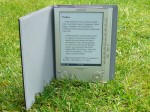
With a slew of recent releases of gadgets that serve as ebook readers (Barnes and Noble Nook, iPad, and all the ones announced at the Consumer Electronics Show), I thought I would take some time to look back on the experience I’ve had with my Sony PRS-505 Reader and why I love it and e-ink technology. (Mine is dark blue, not like the one shown here!)

First of all, I got the Reader a little over 2 years ago in Fall of 2007. I bought it somewhat as an impulse buy, but I justified it as a long term investment. Since then, I read at least 4x more books than I would have otherwise. This is the biggest reason why I’m thankful that I decided to buy the Reader.

Here are the other main reasons why I bought it:

  1. I don’t have space at home for all the books that I want to read, and I don’t do well with library books (see #3)
  2. I don’t have the money to buy all the books I want to read (ebooks are usually cheaper, and many you might be able to find for free)
  3. I’m allergic to old books and dust (I get itchy all over), so I won’t be able to enjoy re-reading any of the physical books, bringing their value down over time

Here are the reasons why I love my reader now:

  1. It is way lighter and smaller to carry around than a book
  2. I like being able to immediately start reading another book once I’ve finished one
  3. The e-ink screen is nice on my eyes, as compared to a lit LCD screen (I get enough of that from staring at my laptop!)

I’m also happy that I chose the Sony Reader over the Amazon Kindle because any of the content that I buy from the Sony store is not locked to my device (i.e. anything bought for the Kindle only works on the Kindle, there are tons of stories if you Google “Kindle DRM”).

I don’t buy books very often, but when I do it is in a format that is more useful and open (usually ePub). The Kindle uses its own proprietary format. Also, I’m not so interested in the wireless download function of the Kindle so that does not bother me.

There was also that incident where Amazon deleted George Orwell books from all Kindles. That type of control is not something I am a fan of. Even though it was for valid reasons and they said they were changing their practices so it wouldn’t happen again, the fact that they have the ability to go into each device and perform that function irks me.

So, while I did have to shell out $280 for my Sony PRS-505, I’ve read enough books to make it worth it and I’m sure that I will be using my Reader for at least 4-5 more years.

Do you have a reader? Would you consider buying a reading device like this? I hope my comments have been helpful!

Image credit: Flickr user cloudsoup

Last night, on the eve of what might be the most exciting Apple announcement this year, I wondered what a Mac slate or tablet could mean for scientists, researchers, and people in the field. Now with the iPad announced and the details of it released, here are some of my thoughts.

The increased mobility of a small device designed to be used with specialized apps and software could boost overall productivity. Functionality, combined with mobility can be incredibly useful for scientists.

For example, Wired has this list of 22 iPhone apps for science geeks that include a genetic decoder, anatomy flash cards, food information database, and a scientific calculator. These could be useful on the iPad too, since the iPad can run any apps in the store.

Increased mobile connectedness to the web can be super powerful. We are already seeing mobile technology being helpful for relief efforts in Haiti and a larger, more powerful, yet still portable, device could enhance what can be done and create new possibilities for these purposes and others.

As for ideas of specific uses of the iPad, I can imagine that a scientist could take this device into their study areas to help record data, look at maps, read reference books, and plot trails and data.

This could possibly help scientists forgo the hours and hours usually spent on data entry!!! Especially since Numbers has a function that creates a form for data entry!

I’ve also read about iPod Touches being used in classrooms to supplement math, science, language and other lessons, so the iPad might eventually make it’s way into the classroom too (but that might take a while because of cost!).

It is cool to see something like this come into being. While the iPad might not end up doing a ton for scientists, I’m still excited to see what will happen with the functionality this new tool!