This is Part 1 out of a 6 part series, continuing on the discussion of geography and sociology discussion of geography and sociology.
The commodification of technology has made it even easier to reach individuals and groups that are physically distant, but virtually neighboring. In the Information Age, new connections between people and groups of people are being created in the virtual world as much as or more than they are in the physical one. Increasingly, the formation, expression, and spread of ideas and information occur in virtual space as opposed to physical space, where the only limitation is the technological connectedness of the actors. The power of ideas and information is what drives Internet relationships and connections. In particular, ideas can be surprisingly empowering, which may culminate as something intellectual such as scientific progress and technological innovation, or something as simple as free access to news and events from other parts of the world. This paper aims to explore ideas as part of networks in virtual space, how it impacts the connections formed, and the society that is thus assembled, drawing on examples as to how ideas may function through actors and connections on the Internet and World Wide Web (hereafter referred to as the Web).
Although ideas are abstract by nature, they have traditionally travelled through actor connections in the physical world. To define idea, one can consider the definition laid out by Merriam-Webster: “a transcendent entity that is a real pattern of which existing things are imperfect representations” (Merriam-Webster). An idea can be as simple as how to boil an egg, or it may be as complex as freedom. The physical home range and mobility of the individual actors, and also the connectedness of the physical mail system usually limit connections in the physical world. Nonetheless, one would have to have a way of obtaining the mailing address of another actor, after having already somehow established a connection. Such connections still proliferate today, but are not the dominating type of connection, especially among the technologically enabled persons of the developed world whose lives are partially being lived out now in the virtual world.
From the perspective of actor-network theory, it is these new connections and new types of connections that will change how society assembles. Ideas in virtual space have the newfound advantage of being an abstraction within an abstract environment. In addition, new types of conflicts and controversies arise out of the newest virtual realms on the Internet as new possibilities are constantly being created. This results in a diverse network of newly created connections that have assembled society in virtual space in a different way than what is possible to occur in physical space. In this paper, I will explore the role of ideas in reassembling society in virtual contexts.
Actor-network theory
In his discussion of actor-network theory (ANT), Bruno Latour (2005) attempts to return to the original definition of social, and to return to being able to trace associations, thereby reassembling society. He aims to clarify that, while social has become a term that has come to mean a type of material, it originally meant a “movement during a process of assembling” (Latour, 2005). The actors, nodes, other elements, and connections form a network, which can be analyzed to reassemble society. In this vein, new connections can be made when actors find a common link through ideas.
Latour engages in a discussion of two approaches to sociology: sociology of the social which focuses on non-social phenomena and aims to use ‘social factors’ to explain the ‘social aspects’ of such phenomena, and sociology of associations which is from the perspective that there is no ‘social dimension’ but that society is one of the connecting elements among many interconnected elements. In other words, there is not a ‘social angle’ to frame a question or problem. This would require approaching the phenomenon of ideas in virtual space not as a social side of the phenomenon of technology, but as connections or associations that are unique to the virtual parts of society that exist or that are being created as part of the process.
It is critical to understand social as a process in the context of the connections made with ideas because it is a dynamic process that includes active as well as passive participants. Social in this case cannot be used to blanket describe the interactions that facilitate the transfer of ideas, but it must be the central process that creates associations for ideas to move through and virtual spaces where they can live. This will then give us the ability to describe how the actors and ideas are connected and interact relative to the network at large. Latour’s work gives a framework for viewing the different elements of the network and deconstructing the social process by which actions are taken to reach configurations.
Virtual space
With relatively recent advances in technology, virtual space – specifically in the form of the Internet – has burgeoned into something much greater and larger than could have been imagined, and with greater complexity making it difficult to comprehend as participants of the space. Virtual space has created a new playground for society, but it has also released economic capacity that has led to the globalized trade networks that we see today. With more effort, we can begin to understand the long term role of virtual space as a new environment for new connections to be made and for society to assemble within.
Technology may be considered to “embod[y] the capacity of societies to transform themselves” (Castells, 2010). It is also the enabling element for virtual space to exist and expand and for the Web to become what it is today. Manuel Castells (2010) discusses how information technology as a mode of production was instrumental to restructuring processes of capitalist systems as modes of development (i.e. informationalism). The relationships of production, experience, and power are discussed to explore how human processes are structured and are put into contexts of class relationships, the state and institutions, and people. These relationships have also traversed into the Web. Nations that have come to be able to take full advantage of technology have propelled themselves forward in the global economy. Cross-cultural exchanges are made possible by the new connections and the nearly boundlessness of the Internet. On another level, multinational collaboration and commerce is much more common and easily managed. The power of technology then also becomes the power to transfer knowledge and information through connections, with the Internet as one main virtual space for connections to be made that form virtual networks of conversation and commerce.
Even though these global macro level relationships may take up new connections and meanings, the micro level human processes have also become transformed to adapt to virtual capacities. People who would never have met at during a different technological era are now able to see each other and instantly communicate via the Internet (although we unfortunately do not have holographic projections yet). Not only that, a person who chooses to leave their homeland can remain in touch and informed without the same time lag that such distance would have imposed in the past. This increased ease of contact and general immediacy has implications for the global exchange and transfer of ideas and information, such as that of the role of the Internet in the proliferation of ideas on democracy and human rights. The role of ideas in society within the virtual space will be a function of the actors connected to it, of the nodes and connections that link them up, and of the potential for cross-network travel.
The questions about geography in virtual space could be summed up by the concept of the re-territorializing of knowledge that takes place in virtual space. Squirre (1996) brings up several questions such as:
“What power relationships shape electronic communities? How are social inequalities played out in electronic contexts and geographies of fear represented, negotiated, and potentially re-defined? How may electronic communications connect individuals with other societies, transforming social consciousness? And how might Internet activities create new geographies of leisure, recreation and tourism?”
The new realm of virtual space should “challenge geographers particularly to forge new understandings of ways of seeing and of being in multiple, and multi-faceted worlds” (Squire, 1996). A major goal of the sociology of associations could be to understand what within these relationships and connections have affected how ideas are connected through networks in virtual spaces and whom they are connected to, which in turn have impact on the assembling of society.
In the next part of this series, I’ll be discussing actor-network theory and virtual space together in more detail.
Literature cited
CASTELLS, M. 2010. The rise of the network society, Malden, MA, Wiley-Blackwell.
LATOUR, B. 2005. Reassembling the social-an introduction to actor-network-theory. Reassembling the Social-An Introduction to Actor-Network-Theory, by Bruno Latour, pp. 316. Foreword by Bruno Latour. Oxford University Press, Sep 2005. ISBN-10: 0199256047. ISBN-13: 9780199256044, 1.
MERRIAM-WEBSTER. Idea – Definition and More [Online]. Merriam-Webster. Available: http://www.merriam-webster.com/dictionary/idea [Accessed 18 April 2013].
SQUIRE, S. J. 1996. Re-Territorializing Knowledge(s): Electronic Spaces and ‘Virtual Geographies’. Area, 28, 101-103.
The best way to characterize my generation would be the generation that witnessed and came of age during the transition into the age of the Internet. In contrast, many of the younger adults I have met do not know what it was like back when connecting to the Internet meant dialing into the network using a modem. In reading Robert M. Kitchin’s article titled “Towards geographies of cyberspace,” the concept of the geography of cyberspace and virtual space is juxtaposed with social and economic geographies. I found it extremely interesting and relevant to issues that still occur.
Despite having been written in 1998, more than a decade ago in real time and several times that in technology time, Kitchin brings up several points that still hold water today. Cyberspace has changed the face of global economics, as well as society, culture, and politics. Cyberspace as a term itself, however, is much outdated and may not accurately encompass all of the virtual space in the realm of the Internet. The Internet and the spaces related to it have now morphed into a range of things that integrate even more with physical spaces than they did before, especially with the adoption of smartphones and apps that make a larger range of interactions and processes possible.
The discussion on economic geographies of cyberspace is intriguing and it is interesting to note that not all industries have transitioned into a virtually dominated workspace. Decentralization has occurred and still occurs, but it is still the case that urban centers are growing in population size and much business still is based from those areas. In the technology sector, it is even more noticeable with certain urban areas being the main clustering of the largest players in the field (e.g. Microsoft and Amazon in Seattle, Google and Facebook in Palo Alto).
In addition to an urban-regional restructuring, it could be argued that there is also rural-regional restructuring. For example, the leapfrogging in Africa of landline telephones to mobile phones, which are now nearly ubiquitous, is inherently a different trajectory than what occurred elsewhere in the world. The hurdles that were present for the development of landlines were easily avoided by the uptake of mobile and satellite technology. News can travel through text messaging, bills can be paid, and transactions negotiated. The trajectory of telecommunications in Africa follows a distinctly different path than that of the Western world, which is another critical indication that globalization is a matter of being ahead or behind.
Kitchin concludes with thoughts on what areas require more research. There is also much debate on freedom of the flow of information, especially with governments getting involved with the regulation of how businesses conduct themselves online. Also, having spent much time in China where Internet is not free flowing, I wonder about the possible implications for freedom of speech and information. In particular, I find it interesting to think about the possibility of virtual justice such that unequal access to cyberspace will further divide groups.
Today is the second day of the meeting of the Convention on Biological Diversity (CBD)’s advisory body, the Subsidiary Body on Scientific, Technical and Technological Advice (SBSTTA), in its 16th meeting (SBSTTA 16). This body makes recommendations for implementation of the Convention.
There is an estimated 600 people here, with delegates and parties representing around 150 – 190 countries, and also attendees representing international organizations like FAO, UNEP, UNDP, DIVERSITAS, and nonprofit organizations in science and technology. It’s a super diplomatic event!
This is the first event I’ve been to where more languages other than English is spoken, and interpreted, for attendees to communicate, make statements and come to decisions. Yes, they have those things you put on your ear to hear the interpretation in real time!
We are here because we have a side event tonight after the working group sessions. The topic is biodiversity and health, with an emphasis on the ecosystem or ecohealth approach to research, policy, and collaboration. We are putting on this side event with DIVERSITAS and the CBD.
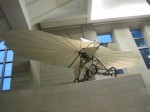
The conference is being held at the International Civil Aviation Organization (ICAO) in Montreal, QC, Canada. The building has many interesting art pieces and historical artifacts. Here is one photo of a cool aviation related thing in the building:

I have written a few times about LEED and green buildings here, here, and here.
This is an opportunity to catch up on the green building industry from an expert! Making Green Buildings is being offered as an online course for the masses, and it is completely free as part of an innovative online course initiative and through the participation of professors from Stanford and other universities.
I’ve signed up, and so has thousands of others. The format will be weekly short video lectures, with some questions and quizzes.
I’ll be blogging about this more as the course starts getting going!
I’ve signed up to these courses offered online through Coursera. The courses are free, with videos and materials all available on the respective websites.
- Databases
- Model Thinking – preview videos are available
- Computer Science 101
- Making Green Buildings
Take a look and see if any of the courses offered past and present interest you! I’ll blog more about them as they start up.
A year ago this month, I purchased new eyeglasses frames from the Earth Conscious Optics line by MODO. They are made completely of recycled plastic. I could also chosen frames that were made from recycled metals. They have been awesome so far, although they don’t sit quite evenly on my nose, but that just might be because my nose is a little uneven!
Here’s what they look like:

They are also doing an interesting promotion where they plant a tree for every pair of frames purchased. Check out their website: ECO Optics
Hopefully I’ll be able to used these frames for several more years to get as much mileage out of them as I can.
This makes me wonder, what other cool upcycled things are out there? Know of any?
Recent comments
Tag Cloud
academia activism behavior climate change CNN conservation development Earth Institute ecohealth EcoHealth Alliance ecology economy education energy environmental decisions evolution fall farming food geography Google graduate students greenanswers.com green building human-environment conflict In Defense of Food Internet journal article knowledge LEED Michael Pollan music Nature New York nutritionism NYT policy recycling Science scientific literacy sociology summer urban farming vertical farming Wikinomics