It bothers me that some restaurants that are supposedly trying to educate the public about food choices and farming STILL charge exorbitant prices for their dishes. One example is the Blue Hill restaurants and farms (which are super prestigious and has received special chef awards and recognition).
What is the point of having that goal for the farm and restaurant if you are only going to reach people whose pocketbooks are fat enough to eat there?
Who is your target? And if you can’t grow and serve food cheaply and on a large enough scale, what are you really accomplishing?
This system is just perpetuating the idea that fresh, healthy food is something that only the elite have a chance of realizing.
Recent comments
Popular posts
Tag Cloud
activism climate change CNN conservation development Earth Institute ecohealth EcoHealth Alliance ecology economy education energy environmental decisions evolution fall farming favorites food GBCI Google greenanswers.com Green Associate green building human-environment conflict In Defense of Food Internet knowledge LEED Michael Pollan music Nature New York nutrition nutritionism NYT policy recycling Science scientific literacy study guide summer urban farming USGBC vertical farming Wikinomics


Nutritionism
June 10, 2009
Books and Stuff to Read, Society, Some Comments
(No comments)
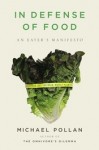
I just started reading Michael Pollan’s In Defense of Food. I read The Omnivore’s Dilemma about a year and a half ago and found it very perspective-changing so I am looking forward to what this book will have to say.
The first few chapters have focused on discussion of the ideology behind “nutritionism.” Pollan points out that this is not a scientific term, though there is “food science” that is involved.
Nutritionists and food scientists seem to have an unusual amount of power over the thoughts, perceptions, and actions of the general public. The pervading misconception is that the key to understanding food is to look at the nutrients and break it down in a reductionist manner, or, as Pollan puts it, that “foods are essentially the sum of their nutrient parts.”
Continue reading →