I’m not really sure what all the details were about the Twitter and Facebook outage last week. But, from reading some of the headlines that were floating around about people feeling lost without access, I think it really is a sign that we are becoming so accustomed to being constantly connected to the Internet and to social networking sites that some people feel so lost when things are different.
We have become so attached to these websites that it seems like they are the only way to effectively reach out to certain types of audiences (not that this is necessarily a bad thing, but it worries me that some people cannot control the amount of time they spend following tweets and updating Fbook). This author is even using Twitter as a way to increase publicity for his novel (probably quite effectively too since there is this CNN article about it. I’d bet that other authors are wishing they had thought of it first…).
I was in a van last winter on the way to the tournament and I noticed how strange it was to be on my computer but offline. I hadn’t been in a situation like that in a long time. It was slightly surreal. I remember the days when it was the opposite, where most of my time on a computer was offline and maybe once a day I would connect to the Internet for a few hours.
Working in this summer camp these past few weeks, I have noticed that a good number of the kids have cell phones that are often hanging from their necks or otherwise close at hand. Is that strange to anyone else? Sure, I understand the safety reasons for giving a small child a mobile phone, but aren’t they a bit young to become reliant on it? This isn’t a big trend by far, but it is becoming more and more frequent.
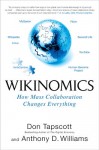
Like the authors of Wikinomics have pointed out, being connected has become a necessity and not using all of the options that technology has to offer is becoming more of a handicap for businesses. They use the term “Net Generation” to describe people who are the twitter followers, the facebook addicts, but also the people who contribute voluminously to creative and knowledge content sites like Flickr and Wikipedia. The power of the Internet is that it allows massive global collaboration.
The Net Generation has grown up with this type of connectedness and will expect that to be a important for every part of their life, personal and work related. But the tricky part is getting businesses to create or allow the creation of the job environments where this can work out for the Net Gen. Business mentalities will have to change and adjust to what the Net Gen will expect should and can be achieved through this new age of connectedness and capability.
EDIT
Check out the song Now Generation by Black Eyed Peas on their latest album The E.N.D.
I just read about this cool initiative in Maine called the Maine Learning Technology Initiative that provides use of laptops to 7th and 8th graders in public schools, and is now expanding to include high school students.
They just ordered 64,000 Macbooks for this reason!
I think it is awesome that they are so serious about helping young students keep up with new technology. They said in a report that having laptops has helped students with learning, especially with writing. Also, knowing how to use the Internet and providing support with computer use is probably huge for families. That makes sense to me.
It doesn’t seem like a program exactly like this would work everywhere, mostly because most other states are more populous, but it is a great example of what direction education can go in to support this up and coming generation.
Wolfram Alpha is a really cool “computational knowledge engine” that a friend (Nat) showed to me.
Here is the demo video:
http://www.wolframalpha.com/screencast/introducingwolframalpha.html
Check it out and play around with it!
http://www.wolframalpha.com/
It is capable of pulling out information and analyzes it in different ways. It can produce graphs and make complex calculations, and a lot of other things if you watch the demo video. This brings me back to a post I wrote earlier about the impact that the Internet has had on knowledge, intelligence, and our minds, especially with the power and dominance of Google.
What is the role of such tools as the search engine or the “knowledge engine” that give us access to mounds of information that can be processed in an instant? It seems to be changing as new ways are invented to organize and find data.

The amount of stimulation the Internet can provide can be overwhelming at times, but I think that this characteristic may be surpassed by the benefits of having large amounts of information at your fingertips.
“Googling” has become almost a daily part of our lives, and only becomes more so as the power of the Google search engines increases its reach. There is, however, an ongoing debate about whether this type of accessibility through technology is making us smarter or dumber.
Though people may argue that having such tempting access to vast oceans of random things on the Internet, I do not think that people can blame the Internet for their own lack of focus, concentration, or contemplation.
We’ve been through similar experiences with the onset of cable television, but the Internet seems to be the new scapegoat for decreased productivity or intelligent thought.
I tend to agree with this author from Discover Magazine, who says that this type of access to information can be a natural extension of our minds that can allow us to learn more easily because we are able to go out and grab the bits of information that we need at any moment.
So I think that this means that, if our minds are jumbled and easily distracted, our online activity will represent that jumbled mess, often through distracted clicking. We can’t blame the tools we have for the ways that we are using them. That would be like chopping vegetables and getting angry at the knife because we cut ourselves from lack of concentration on finger location among the vegetables.
Recent comments
Popular posts
Tag Cloud
activism climate change CNN conservation development Earth Institute ecohealth EcoHealth Alliance ecology economy education energy environmental decisions evolution fall farming favorites food GBCI Google greenanswers.com Green Associate green building human-environment conflict In Defense of Food Internet knowledge LEED Michael Pollan music Nature New York nutrition nutritionism NYT policy recycling Science scientific literacy study guide summer urban farming USGBC vertical farming Wikinomics


The wikiquest for innovation
July 31, 2009
Books and Stuff to Read, Society, Some Comments, Technology
(No comments)
Quotes:
Pg. 28
Pg. 29
Etsy.com is a great example of a place where people from all over can come together to create an ecosystem for growth. When you purchase handmade goods on the website, you are buying directly from the maker/seller, cutting most of the middlemen and transaction costs. I recently purchased a case for my camera on the site from a person in Dallas, TX. Without this marketplace for people to gather at, I may have gone to buy a product from a big name company.
There are tons of examples of how the Internet has spread knowledge, goods, and connected people to create value. It really is amazing how much can be accomplished nowadays! I’ll post more when I have read more of the book.