"We cannot solve our problems with the same thinking we used when we created them."

Albert Einstein

[Originally posted May, 15, 2009]
(This semester our class had the opportunity to have Adam Bly of Seed Media Group as a guest speaker. I asked him his opinion on the role of education in scientific literacy, specifically for the piece I wrote and posted here earlier. The following is the response he sent me. Thanks Adam!)

At the heart of how I feel about science education is the idea that science should be used as a lens through which to look at the world, not just a subject to be taught. And further; science education goes on forever and should be available to everyone.

We live in a world where we now produce more information in a year than in all prior human history combined. Graduating college no longer means you know the essentials of your field. Fields merge and change with new data. Walls between scientific disciplines are torn down. Education must run parallel with any successful pursuit of a profession. We now see universities cater to this new reality. Many universities offer their course material for free. It’s a great model. What the universities can still offer exclusively to their paying students, is valuable access to professors and a network of other students.

But the bigger picture in my view of science education is a scientifically literate nation. That’s the goal. To have a population that understands scientific concepts and processes is more crucial to the progress of our country, than churning out a certain number of scientists and engineers.

In order to translate this ideal to the classrooms, teachers and anyone else in charge of shaping curriculums, must acknowledge science as a prime driving force in society. The teaching of natural sciences should be as actively connected to and engaged in current events and advancements as the social sciences are. Science education needs to be connected to science news.
Continue reading →

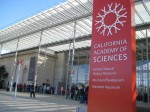
California Academy of Sciences

While on my trip last week out to the West Coast to visit my cousin before attending a wedding, I had the opportunity to check out the new building for the California Academy of Sciences that opened last September in San Francisco.

Continue reading →

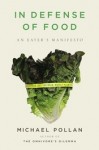
InDefenseFood_cover_thumb

I just started reading Michael Pollan’s In Defense of Food. I read The Omnivore’s Dilemma about a year and a half ago and found it very perspective-changing so I am looking forward to what this book will have to say.

The first few chapters have focused on discussion of the ideology behind “nutritionism.” Pollan points out that this is not a scientific term, though there is “food science” that is involved.

Nutritionists and food scientists seem to have an unusual amount of power over the thoughts, perceptions, and actions of the general public. The pervading misconception is that the key to understanding food is to look at the nutrients and break it down in a reductionist manner, or, as Pollan puts it, that “foods are essentially the sum of their nutrient parts.”
Continue reading →

sciencebarge

That might sound like a strange idea, but it is possible! The Science Barge is a floating farm museum, currently docked in Yonkers, NY, that aims to bring awareness about urban farming. They claim to grow tomatoes, lettuce, and cucumbers with zero carbon emissions, zero pesticides, and zero runoff. Thousands of schoolchildren, adults, and press people have visited the barge since it opened in 2007.

They use hydroponics to grow their vegetables, which is also a large component of vertical farming. When I spoke to Dickson Despommier, he implied that large scale urban or indoor farming is not possible without hydroponic technology. Considering the lack of space or soil in New York City, I tend to agree with him, though I am not an expert on hydroponics.


The barge presents an interesting way to get the public interested in urban farming. Though it is just a museum, it is a great step in the right direction to getting people to think about getting their food through low-impact methods. If hydroponic farming could be done on a larger scale, either through more barges or vertical farming, the barge has the important role of easing this idea into the public eye. Education is key!


For more pictures of the Science Barge, check out this New York Times slideshow or Flickr slideshow.


(On a side note, a friend recently gave me a copy of the book The Lorax signed by Dickson Despommier as a graduation gift!)

Image credit: NYSunworks.org

“Can you explain stem cell research to me?”

This is not what you would normally hear on the car ride back to campus, after a week of on Spring Break. You might think we’d be talking about the Ultimate Frisbee tournament we just played at, the nice beach that we stayed near, or anything on the crazy list of happenings.

So, as any good shotty should, I entertained my driver with a brief account of stem cell research. Considering how much stem cell research has been in the news lately, it may not be all that surprising that this conversation actually happened.

But if you didn’t have someone science-y handy, how many people would care enough to take the time to actually find out the details?

With issues like stem cell research frequently appearing in the headlines of most news outlets in the country, it is becoming more and more important for the average citizen to understand scientific concepts in order to form their own opinions on the subjects. Not unlike other areas of interest, level of education seems to play a large role in the depth at which they can understand a scientific concept.

My companion at the wheel, Joe, is a graduate student at Teacher’s College, hoping to get a gig teaching English in high school next year. Joe is a non-science major, but he finds value in understanding science-related current issues. So what is the current status of science and scientific literacy among young adults?

To get a general feel for the situation, I set out to make a rough study of my peers. I created an online survey to assess the level of interest in and understanding of science among current college students, as well as some people who have been out of school for a number of years. Respondents were mostly people that I reached through social networking sites and word of mouth. I also set up 8 interviews with current and recent Columbia University students to get a better sense of how Columbia’s Core Curriculum fares in all of this, specifically the course “Frontiers of Science” – FoS. Many of the respondents and interviewees were friends or acquaintances so this exercise is nowhere near rigorous enough to compare with full scientific study. However, I am confident that the responses are honest and can give some indication of the general situation.
Continue reading →

April 27, 2009

Misc, Society

6 comments

I’m still working on that piece on scientific literacy for my writing about science course. I mentioned it in an earlier post.
Here are some of the parts and quotes that I have cut out:

  • A recent Columbia graduate comments on her experience in a course called “Better Planet By Design,” saying that, “It made me realize that we can have a lot more of an effect on the environment than I realized. I mean I knew we were contributing to all these things like global warming, but I thought the situation was kind of hopeless. Are we really going to stop using fossil fuels and all this stuff then I learned that there were a lot of things that really can make a large effect and I thought that was really interesting.”
  • “So that’s a problem if you are trying to encourage children to like science, like maths. To be able to do them, to not be afraid of them. If you’re someone who has gotten into a field specifically because you are afraid of it or you don’t have as much of an interest, it’s going to cause problems when trying to get other people interested in it.”
  • “I think that there is a lot of involvement of politics with science that people almost don’t care to look into because they have some emotional investment in holding their viewpoint especially with stem cell research and evolution versus creationism. Like somehow conflicts with their religion.”
  • “It’s sort of like they are finding science to back up their preexisting sort of moral ideas and I feel like when someone reads something that backs up something they already think, what’s like a widely held societal norm like say about gender roles, like about adolescence and what that means in society or something, that you don’t want to look any further because it already confirmed what you already thought.”
  • “I think that when you have a little bit more knowledge and have read scientific studies about biological mechanisms and how these things actually work and how studies are done, then you have a better sense when you are reading the newspaper about whether the alarming statistic you are reading is actually alarming. You could think a little more critically about whether it’s just correlation and not causation.”

I’m handing in a second draft today, but the final draft should be done by the end of this week. Hopefully I will post it here soon after!