"We cannot solve our problems with the same thinking we used when we created them."

Albert Einstein

I’m currently in the middle of an application for StartingBloc, which is an organization that holds a fellowship on Social Innovation. Part of the application process is a series of essays. One of which asks how I “live” social innovation.

So now I have to figure out, what is social innovation? And how do I live it?

Perhaps it is taking new ideas to solve increasingly complex and intertwined problems. As I’ve learned more and read more books, I’m starting to think about things in new ways and to try to combine ideas in new and innovative ways that I think will be important new ways to see things.

The ideas that I’ll be thinking mostly about will be mass collaboration (like what I read about in Wikinomics) and how that has changed with access to the Internet, and the shift towards creating value in knowledge.

Something that I love about the Internet that it is the best tool we have to connect and communicate with other people. The potential for great work to be done is so huge that it gives me such great hope for the future. I like the idea that I can achieve more just by being able to reach out to other people who know more than I do and who may be willing to help in my quests.

I am aware, though, that my blog is in danger of just becoming a stagnant place for me to present my thoughts and projects. That is cool and I hope I can continue to write about topics that interest people, but I hope that this blog may become more of a hub for other thinkers to gather and contribute to a conversation. That said, please keep reading my blog, post comments, and email me about being a guest contributor!!

Wikinomics

Some more interesting quotes from the book Wikinomics by Don Tapscott and Anthony D. Williams:

“We must encourage innovation without eroding the vitality of the scientific and cultural commons. We need an incentive system that rewards inventors and knowledge producers and encourages dissemination of their output.” Pg. 240

“The culture of generosity is the very backbone of the Internet.” Pg. 274

“Innovation is less about inventing and building physical things and more about orchestrating or coordinating good ideas.” Pg. 290

I’m not really sure what all the details were about the Twitter and Facebook outage last week. But, from reading some of the headlines that were floating around about people feeling lost without access, I think it really is a sign that we are becoming so accustomed to being constantly connected to the Internet and to social networking sites that some people feel so lost when things are different.

We have become so attached to these websites that it seems like they are the only way to effectively reach out to certain types of audiences (not that this is necessarily a bad thing, but it worries me that some people cannot control the amount of time they spend following tweets and updating Fbook). This author is even using Twitter as a way to increase publicity for his novel (probably quite effectively too since there is this CNN article about it. I’d bet that other authors are wishing they had thought of it first…).

I was in a van last winter on the way to the tournament and I noticed how strange it was to be on my computer but offline. I hadn’t been in a situation like that in a long time. It was slightly surreal. I remember the days when it was the opposite, where most of my time on a computer was offline and maybe once a day I would connect to the Internet for a few hours.

Working in this summer camp these past few weeks, I have noticed that a good number of the kids have cell phones that are often hanging from their necks or otherwise close at hand. Is that strange to anyone else? Sure, I understand the safety reasons for giving a small child a mobile phone, but aren’t they a bit young to become reliant on it? This isn’t a big trend by far, but it is becoming more and more frequent.

Like the authors of Wikinomics have pointed out, being connected has become a necessity and not using all of the options that technology has to offer is becoming more of a handicap for businesses. They use the term “Net Generation” to describe people who are the twitter followers, the facebook addicts, but also the people who contribute voluminously to creative and knowledge content sites like Flickr and Wikipedia. The power of the Internet is that it allows massive global collaboration.

The Net Generation has grown up with this type of connectedness and will expect that to be a important for every part of their life, personal and work related. But the tricky part is getting businesses to create or allow the creation of the job environments where this can work out for the Net Gen. Business mentalities will have to change and adjust to what the Net Gen will expect should and can be achieved through this new age of connectedness and capability.


EDIT
Check out the song Now Generation by Black Eyed Peas on their latest album The E.N.D.

August 4, 2009

Society, Some Comments

1 comment

The Senate is in a position to pass a climate change bill aimed at the energy industry. There are some things that were changed through much of the politicking going on, and it is unsure whether the bill would be successful at doing much in the way of reducing emissions.

Here are a few opinions:

Whichever method is chosen, something should be done soon. If cap-and-trade policy is less effective than taxing carbon, then we will find out and should be flexible to adapt our policy.

We WILL NOT get things right the first time around! We cannot expect to! Policy should not be written and left stagnant anyway! But we can’t afford to argue back and forth about which policy will work better. That would take way too long to make anything happen.

We are missing the point by debating over what type of policy would work better. We should be open and flexible while ensuring that whatever policy is implemented is as strong as it can be, predicts any abuses, and doesn’t have any loopholes.
Continue reading →

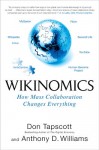
WikinomicsI’m currently in the middle of the book Wikinomics by Don Tapscott and Anthony D. Williams. They discuss the increasing popularity and need for collaborative effort to create value and content in this economy. Examples range from the music industry to server software.

Quotes:

Pg. 28

“By definition, a truly global economy has no physical or regional boundaries. It builds planetary ecosystems for designing, sourcing, assembling and distributing products on a global basis.”

Pg. 29

“The difference today is that the organizational values, skills, tools, processes and architectures of the ebbing command and control economy are not simply outdated; they are handicaps on the value creation process.”

Etsy.com is a great example of a place where people from all over can come together to create an ecosystem for growth. When you purchase handmade goods on the website, you are buying directly from the maker/seller, cutting most of the middlemen and transaction costs. I recently purchased a case for my camera on the site from a person in Dallas, TX. Without this marketplace for people to gather at, I may have gone to buy a product from a big name company.

There are tons of examples of how the Internet has spread knowledge, goods, and connected people to create value. It really is amazing how much can be accomplished nowadays! I’ll post more when I have read more of the book.